

 CART
CART

Choosing the right skip bin size comes down to three things: how much waste you have, the type of waste you’re getting rid of, and the job you’re doing. As a rough rule, smaller clean-ups and garden jobs usually sit at the 2 to 3m³ end, while renovations and bigger projects often call for 4m³ or more. But the only way to know for sure is to work through your own numbers, and this guide will help you do that.
A small household clean-up might only need a 2m³ bin. A renovation, house move or larger construction job can need considerably more capacity, and getting the size wrong in either direction costs you money or time. Below, you’ll find how to estimate your waste, what else to consider beyond volume, and which size suits common jobs like renovations, moving house, and garden clean-ups.
If you already know the dimensions and specs you’re after, our skip bin sizes page has the full range.
How Do I Work Out What Size Skip Bin I Need?
Estimate the Volume of Your Waste
The simplest way to estimate how much skip bin capacity you need is to picture your waste as a rough block and calculate its volume in cubic metres:
Length × Width × Height = cubic metres (m³)
For example, if your waste pile is roughly 2m long, 1m wide and 1m high, that’s 2m³ of waste.
Loose waste rarely stacks as neatly as a block, so treat this as a starting estimate rather than an exact figure. It’s still the fastest way to get in the right ballpark before you book.

Think About the Type of Waste
Volume isn’t the only factor. Different jobs produce different waste, and the type affects which bin and service is appropriate:
- General household waste: everyday clean-up and decluttering waste.
- Green waste: branches, leaves, grass clippings and garden offcuts.
- Mixed building waste: offcuts, packaging and general renovation debris.
- Bricks and concrete: heavy, dense material that fills a bin’s weight limit long before it fills the space.
- Dirt and clay: also weight-heavy rather than volume-heavy.
Consider How Much Space You Have
A bin that’s the right size on paper is no use if there’s nowhere to put it. Before you settle on a size, check the space where the bin will sit, whether it needs to go on the road or verge, and whether access for delivery and pick-up is clear. It’s common to end up needing a smaller bin simply because of where it has to go, not because of how much waste there is.
Quick Guide to Choosing Your Skip Bin Size
| Bin size | Approximate capacity | Typically suited to |
| 2m³ | Small | Minor household or garden clean-ups |
| 3m³ | Small-medium | Garage, bathroom and smaller renovation jobs |
| 4m³ | Medium | Household clean-ups and renovations |
| 6m³ | Medium-large | Larger renovations, moving and property clean-ups |
| 8m³ | Large | Larger renovation or building projects |
| 9m³ | Large | Construction and substantial clean-ups |
| 10m³ | Extra large | Major property and commercial projects |
For dimensions, weight limits, and the full range, see our skip bin sizes page.
What Size Skip Bin Do I Need for My Project?
House Clean-Up
Decluttering and single rooms are usually an easy, small bin job. Whole-house clean-outs are where it gets harder. Years of stuff tucked into cupboards, the shed, under the house, none of it registers until it’s all pulled out and sitting on the lawn. If you’re doing the whole house, walk every room before you decide on a size. Don’t guess from the doorway.
Moving House
Furniture you’re not taking, boxes you never unpacked from the last move, whatever’s lived in the garage since you moved in. It’s rarely one pile; it’s several, and they all need adding together.
Bathroom Renovation
Old tiles and a ripped-out vanity don’t look like much, but they’re dense. A bin can be nowhere near full and already at its weight limit. If masonry’s coming out, check our mixed building waste page for what’s accepted before you book.
Kitchen Renovation
This one’s deceptive. A kitchen looks compact until the cabinetry comes out flat-packed materials take up far more room disassembled than they ever did on the wall. Go cupboard by cupboard when you’re estimating, not room by room.
Garden Clean-Up
A prune and a mow might not even fill a small bin. Taking down trees is a different job entirely; once branches are on the ground rather than standing, the pile grows fast. Our green waste page has the details on what’s accepted.
Building and Construction Work
Weight, not volume, decides the bin here. Bricks and concrete will max out the tonnage limit long before the bin looks full, so check the weight allowance before you size anything for a construction job.
Deceased Estate or Major Property Clean-Out
Of everything on this list, these are the easiest to get wrong. There’s no single pile to look at and estimate from. It’s spread across garages, sheds, an attic, rooms nobody’s opened in years. Go through the whole property room by room. It will almost always be more than it looks like from the front door.
Should I Choose a Bigger Skip Bin Than I Think I Need?
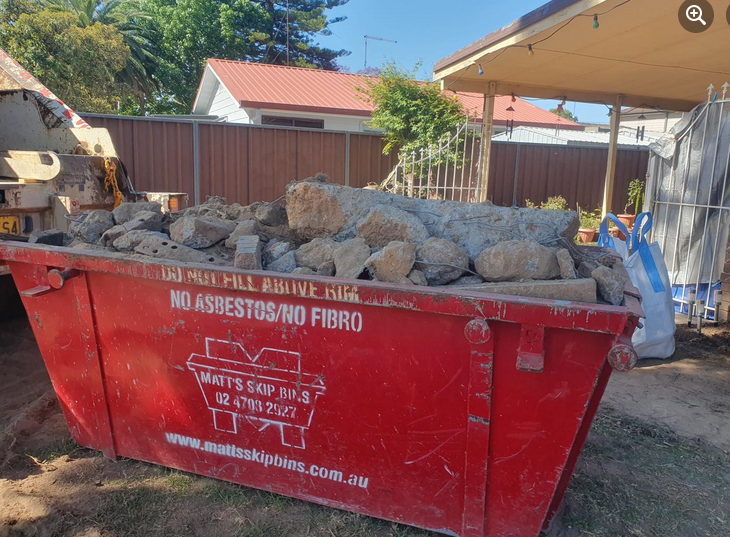
There’s a reasonable case for sizing up slightly rather than under-ordering. A bin that’s a touch bigger than needed means the job gets done in one visit. A bin that’s too small can mean arranging a second bin or an additional collection, which adds time and hassle on top of whatever it costs.
That said, this isn’t a blanket rule, it depends on your situation and what’s available at the time. Skip bins also have a permitted fill level, so if you’re right on a size cut-off, it’s generally worth going a size up rather than risking an overfilled bin.
What Happens If My Skip Bin Is Too Small?
If your bin fills up before your waste does, you’re left with excess material and few good options. You may need to arrange another bin or an extra collection, and either way it adds time and cost you weren’t planning on.
Working through the estimation method above before you book is the simplest way to avoid this.
Common Skip Bin Sizing Mistakes
- Estimating by eye without working out a rough volume first.
- Underestimating how bulky furniture and building materials are once they’re out of the house.
- Choosing a size based on volume alone and ignoring weight or waste type.
- Ordering exactly your estimated volume with no margin for error.
- Not checking where the bin can actually be placed before booking.
Still Not Sure What Size Skip Bin You Need?
If you’re stuck deciding between two sizes, tell Matt’s Skip Bins what you’re disposing of, roughly how much you have, and what type of project you’re doing. We can help you land on the right bin before you book.
You can view the full range on our skip bin sizes page, or get in touch with the team directly to talk it through.
FAQ
How do I calculate what size skip bin I need?
Multiply the length, width and height of your waste pile to get a volume in cubic metres. It won’t be exact, since waste doesn’t stack like a perfect block, but it’s a reliable starting point for choosing a size.
What size skip bin do I need for a house clean-up?
It depends on scope. A single room or garage clean-up needs far less than a full house clean-out. Estimate the volume first, then check it against the size guide above.
What size skip bin do I need for a renovation?
Renovation waste needs both a volume estimate and a check on weight and material type, since heavy waste like tiles, concrete or cement sheeting fills a bin’s weight limit before it fills the space.
Is it better to get a bigger skip bin?
There are trade-offs either way. A slightly larger bin avoids the hassle of running out of space, but the right choice depends on your job and what’s available at the time. It’s not a universal “always go bigger.”
Can I fill a skip bin above the top?
No. Skip bins have a permitted fill level, and loading above it isn’t allowed for safety and transport reasons.
Does the type of waste affect the bin size I can hire?
Yes. Heavier waste like bricks, concrete or dirt fills the weight limit well before it fills the available space, so the type of waste matters as much as the volume. Our waste type pages cover what’s accepted in each bin.

